
Consumption in the Electric Power Sector
The electric power sector consists of facilities that generate electricity primarily for use by the public. Energy is used for the generation, distribution, and transmission of electric power.
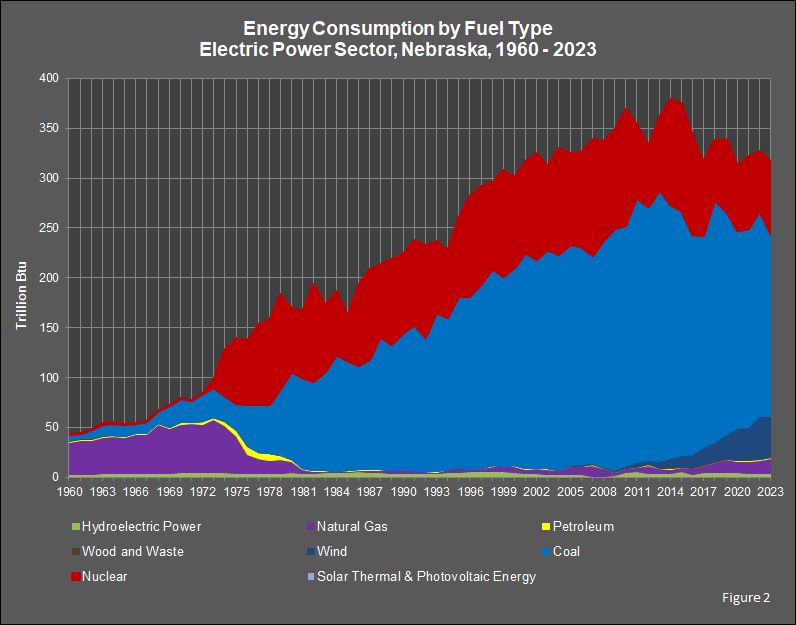
Between 2022 and 2023, electric power sector energy use decreased 3.0 percent to 317.1 trillion British thermal units (Btu). Nuclear electric power use increased 23.3 percent, petroleum use increased 16.9 percent, and natural gas use increased 4.7 percent. Coal use decreased 11.0 percent, and renewable energy use decreased 4.8 percent..
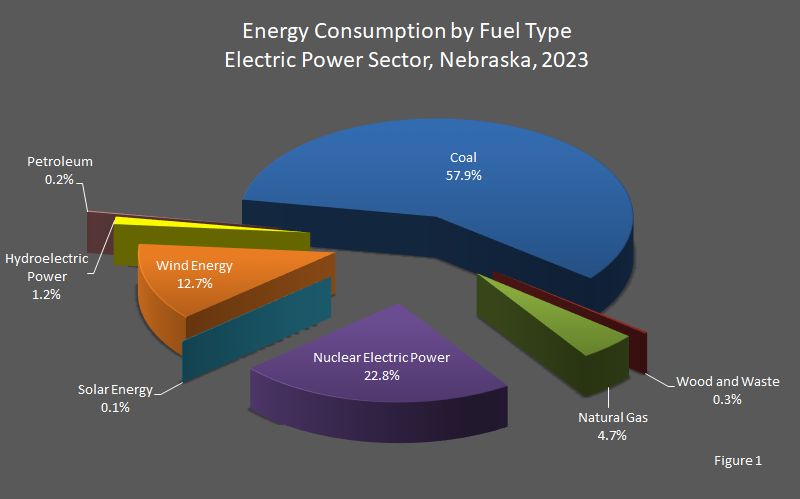
The principal fuels used at electric utilities in 2023 were coal (57.94 percent), nuclear electric power (22.83 percent), and renewable energy (14.34 percent). Natural gas (4.73 percent) and petroleum (0.17 percent) made up the other 4.90 percent of fuels consumed. Renewable energy was comprised of hydroelectric power, solar thermal and photovoltaic energy, wind energy, and wood and waste. Petroleum was comprised totally of distillate fuel oil (Figure 1).
In 2023, if there was consumption of geothermal energy in the electric power sector, it was comparatively small and rounded to zero.
More information on solar energy, geothermal energy, and wind energy in Nebraska is available.
Hydroelectric power, solar energy, wind energy, and wood and waste data was included in the renewable fuels total, but is shown separately in the graphs and data tables below.
| Attachment | Size |
|---|---|
| 2020 - 2023 | 43.36 KB |
| 2000 - 2019 | 46.03 KB |
| 1980 - 1999 | 45.89 KB |
| 1960 - 1979 | 45.82 KB |
Sources: State Energy Data Report. Energy Information Administration, Washington, DC. Nebraska Department of Water, Energy, and Environment, Lincoln, NE.
This report was updated on December 11, 2025.
Typically, there is a year between updates.